Asbestos in the home
Are you thinking of making improvements to your home?
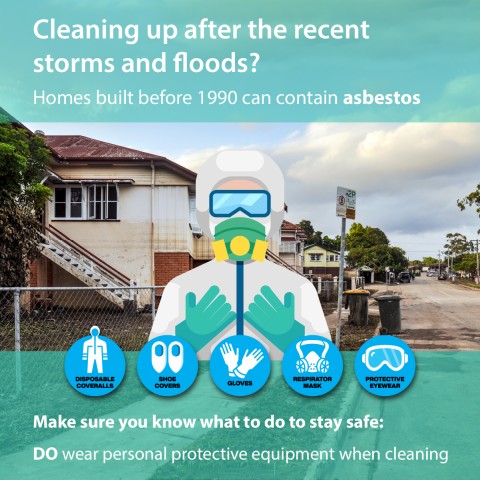
However, it’s important to know that many houses built before 1990 contain asbestos cement materials, especially in the eaves, ceilings, internal and external wall cladding (particularly in wet areas such as bathrooms and laundries), as well as under tiling and lino. Old sheds and fences may also contain asbestos.
These can often be in poor condition due to age or weather exposure and pose a significant risk if asbestos fibres are released, become airborne and then inhaled. Breathing these fibres can cause a range of life-threatening diseases including mesothelioma, lung cancer and asbestosis.
If you think there may be asbestos in or around your property, you should contact an asbestos professional (asbestos assessor or licensed removalist) before starting any work on your home.
However, it’s important to know that many houses built before 1990 contain asbestos cement materials, especially in the eaves, ceilings, internal and external wall cladding (particularly in wet areas such as bathrooms and laundries), as well as under tiling and lino. Old sheds and fences may also contain asbestos.
These can often be in poor condition due to age or weather exposure and pose a significant risk if asbestos fibres are released, become airborne and then inhaled. Breathing these fibres can cause a range of life-threatening diseases including mesothelioma, lung cancer and asbestosis.
If you think there may be asbestos in or around your property, you should contact an asbestos professional (asbestos assessor or licensed removalist) before starting any work on your home.

Download the: Is asbestos in your home postcard
Click on the image below on the left to view the Asbestos safety for householders and home renovators brochure or go to asbestossafety-homeowners.com.au
Click on the image below on the right for THE RESIDENTIAL CHECKLIST: A HOMEOWNER’S GUIDE TO IDENTIFYING ASBESTOS-CONTAINING MATERIAL TO MANAGE IT SAFELY, go to https://asbestosawareness.com.au/fact-sheets/ for more fact sheets and checklists.
Contact us for more information
Since 2000 AVA has helped hundreds of South Australian members and families across the state.
AVA is a not for profit organisation, and we work to raise awareness of the dangers of asbestos exposure.
We provide support and advocacy for those affected by asbestos and silica-related diseases, as well as family members and carers.
This service is offered free of charge every day, at any time of day.

Workplace exposure limits for nine workplace chemicals will remain unchanged following a review.
After consideration of Safe Work Australia’s Decision Regulation Impact Statement by WHS Ministers around the country, a majority decision to introduce new exposure limits on 1 December 2026 was not reached and further work has been requested for limits to be lowered on the following chemicals:
🔹Benzene
🔹Chlorine
🔹Copper
🔹Formaldehyde
🔹Hydrogen cyanide
🔹Hydrogen sulphide
🔹Nitrogen dioxide
🔹Respirable crystalline silica and
🔹Titanium dioxide
𝗪𝗵𝗮𝘁 𝗱𝗼𝗲𝘀 𝘁𝗵𝗶𝘀 𝗺𝗲𝗮𝗻?
✅ Following a review, workplace exposure limits for these nine chemicals will remain unchanged when Australia transitions to the new Workplace Exposure Limits from 1 December 2026.
✅ The current exposure levels for these chemicals will remain in the place when the new limits come into effect.
Find out more about the decision 👉 https://bit.ly/4bDvczA
After consideration of Safe Work Australia’s Decision Regulation Impact Statement by WHS Ministers around the country, a majority decision to introduce new exposure limits on 1 December 2026 was not reached and further work has been requested for limits to be lowered on the following chemicals:
🔹Benzene
🔹Chlorine
🔹Copper
🔹Formaldehyde
🔹Hydrogen cyanide
🔹Hydrogen sulphide
🔹Nitrogen dioxide
🔹Respirable crystalline silica and
🔹Titanium dioxide
𝗪𝗵𝗮𝘁 𝗱𝗼𝗲𝘀 𝘁𝗵𝗶𝘀 𝗺𝗲𝗮𝗻?
✅ Following a review, workplace exposure limits for these nine chemicals will remain unchanged when Australia transitions to the new Workplace Exposure Limits from 1 December 2026.
✅ The current exposure levels for these chemicals will remain in the place when the new limits come into effect.
Find out more about the decision 👉 https://bit.ly/4bDvczA